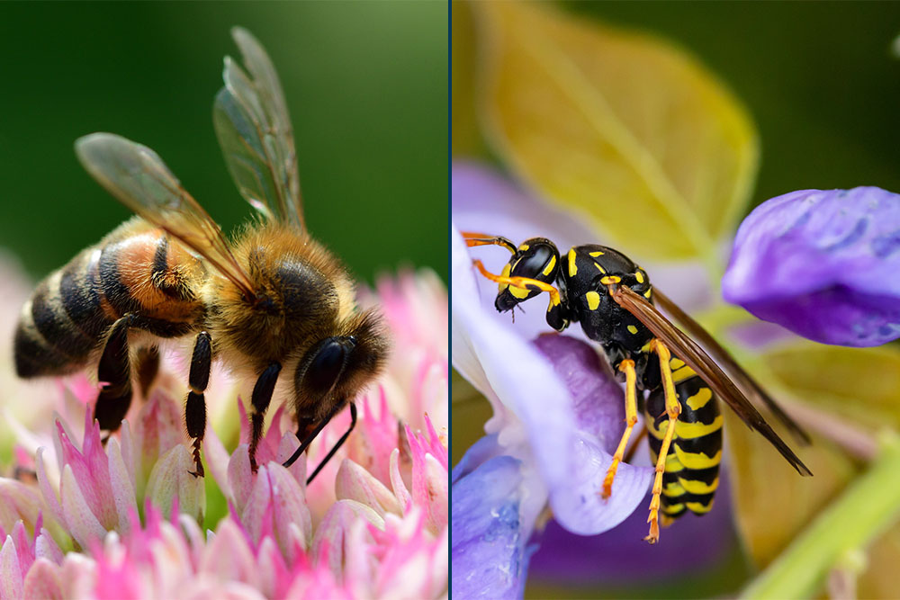
Bees and Wasps Are Similar Yet Surprisingly Different
by Dellany Onyango, age 9
Bees and wasps are winged insects that share many similarities but also have distinct differences. Both insects have a proboscis, a specialized mouthpart that helps them drink water and nectar. Female bees and wasps have an organ called an ovipositor, which can be used for either laying eggs or, in some species, as a stinger. Since male bees and wasps don’t lay eggs, they do not have an ovipositor and, therefore, cannot sting.
Bees and wasps are found on all continents except Antarctica and can thrive in various environments, from deserts to grasslands. Their diets mainly consist of nectar and pollen, but some wasps are also carnivorous, feeding on small invertebrates such as caterpillars and spiders.
Bees and wasps have unique body features that vary in color and size. While bees are typically hairy and stout, wasps have sleeker, longer bodies. Female and male wasps can grow up to two inches long, with some species having bright yellow and black abdomens. Although male wasps do not have stingers, some species can still inject venom into their prey or predators. Many wasps are also known to paralyze caterpillars with their sting before laying eggs inside them, a behavior common in parasitic wasps.
Both bees and wasps play an essential role in ecosystems. Bees are key pollinators that help ensure the reproduction of flowering plants and crops, while wasps contribute to pest control by preying on harmful insects. Protecting these small but vital creatures is crucial for maintaining biodiversity, sustaining agriculture, and ensuring a balanced ecosystem.
[Source: The Ultimate Guide to the Animal Kingdom]











Loading Comments...