Can You Tell the Difference Between a Floating Plastic Bag and a Jellyfish?
by Celestia McPark, age 7
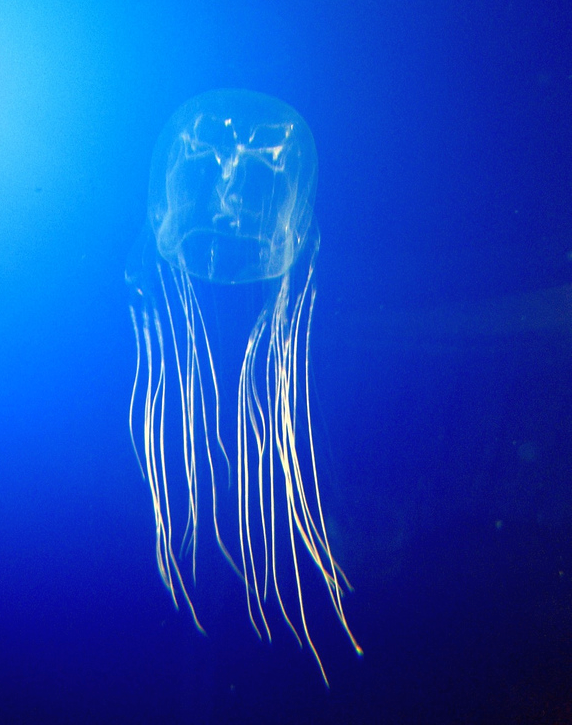
The box jellyfish is a threat to humans and animals. They have 15 to 60 tentacles and they attack by injecting venom wherever their tentacle is stuck.
Box jellyfish live in warm places like Australia, Southeast Asia, the Indo-Pacific Ocean, and Hawaii. Their prey lives in warmer habitats, such as shallow coastal waters. The prey consists of small fish, prawns, shrimp, and other small crustaceans. The main predators of the box jellyfish are green sea turtles; other predators include batfish, butterfish, rabbitfish, and sometimes tuna.
Box jellyfish have a jelly-bell-type top. They have no brain, but they do have a nervous system and long, poisonous tentacles. The jellyfish also looks like a floating plastic bag, pale blue and transparent. They use their tentacles for defense and hunting, as they face many predators and prey.
The Chironex fleckeri is one of the largest species of box jellyfish. Their bell is 11 feet and 30 inches and their tentacles are ten feet. The regular adult box jellyfish bell is six to eight feet. Some of the small species, like the irukandji jellyfish, are about the size of a thumbnail. The chironex fleckeri weighs 4.4 pounds, but most medium-sized jellyfish weigh 100 to 500 grams, and the irukandji weighs less than one gram.
Box jellyfish are among the most dangerous marine animals with stings that can cause intense pain. Although some are big or small, these jellyfish are still deadly in their own way.
[Sources: Northern Territory Government of Australia; National Geographic; Britannica]











Loading Comments...