Florida Softshell Turtle Relies on Unique Defenses to Survive
by Ermiyas Abiy, age 10
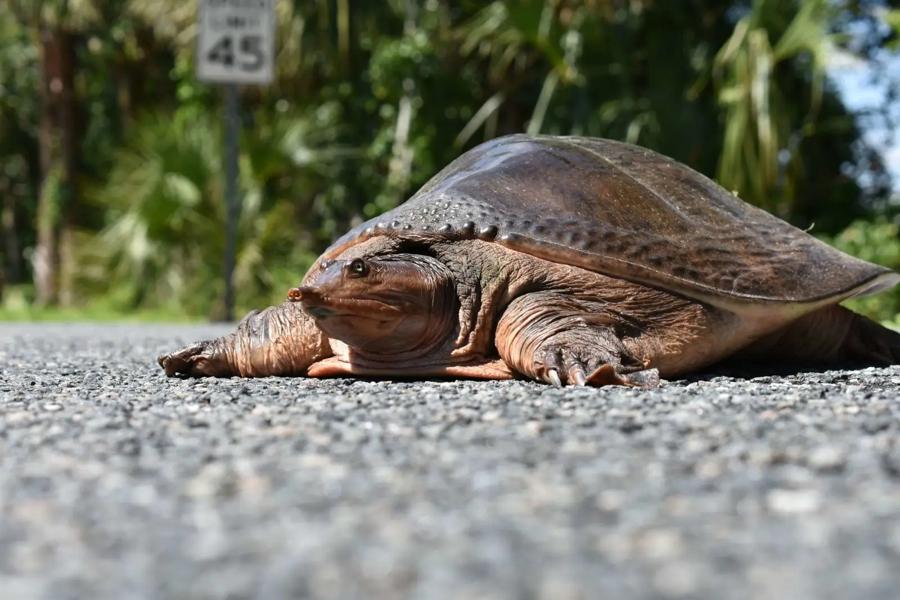
The softshell turtle navigates the wild with a bumpy, flat, and softer outer shell and is often distinguished for its tube-shaped nose protruding from its face. Despite its soft shell, compared to a “typical” turtle, the Florida softshell turtle isn’t less protected, yet it can be more vulnerable to certain threats.
Florida softshells are different sizes depending on their gender. Adult males are about six to eight inches in length, while adult females are nine to eleven inches, making them larger than the males; however, adult male turtles have longer tails. Both the females and the males have leathery, dark brown, soft shells with bumps behind their heads and long necks. They have webbed feet, allowing them to swim, and long noses, helping them breathe, as they can stick them out of the water's surface while staying mostly submerged.
This creature lives in Florida and South Carolina. They like to live in damp areas such as swamps, rivers, and muddy bodies of water. They hibernate in muddy habitats to hide themselves during winter.
These turtles are omnivores, as they eat snails, insects, fish, and crustaceans. On rare occasions, they can eat small birds. Whenever they feel endangered, they release a smell that repels predators. In captivity, they can live up to 20 years, but it is not known how long they can live in the wild.
The nesting season for long-nosed turtles is between March and July. Female long-nosed turtles lay an average of 20 eggs per nesting. Females can lay up to six times during this season.
There are many threats to the safety of long-nosed turtles. Birds, bears, and red foxes lay long-nosed turtle eggs. After they hatch, there are fish, turtles, skunks, and armadillos hunting for the babies. Alligators are the main predators, as they will eat the turtle at any age. These turtles also die due to environmental threats like habitat loss and dise, as well as human threats. Florida softshells often die due to habitat loss caused by pollution and human development. While in the search for a new home or nesting areas, the turtles may need to cross roads. In the process, Cessy can be struck by cars.
The Florida softshell turtle is a unique and well-adapted species. It plays an important role in wetlands, rivers, and water ecosystems in the United States. Protecting this turtle is critical to ensure the preservation of its species along with its environment.
[Source: Florida Fish and Wildlife Conservation Commission]











Loading Comments...