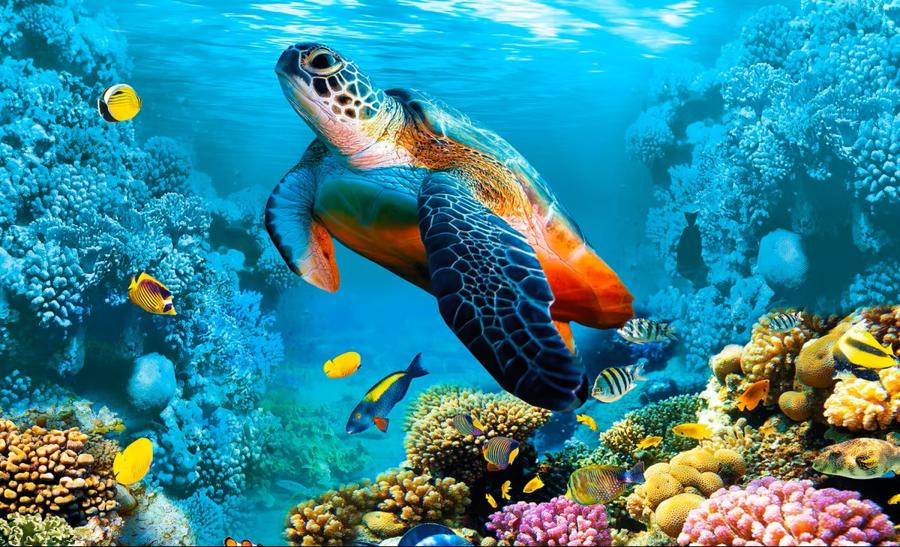
Endangered Sea Turtles Fill Key Role in Aquatic Ecosystems
by Layla Calahan, age 12
Sea turtles are very important to ocean ecosystems, and they have lived for 100 million years. Unfortunately, some species of sea turtles are critically endangered.
Sea turtles support the health of seagrass and coral reefs, which helps important species thrive. While they are important for the environment, they also serve cultural significance for humans. For example, people use sea turtles for religious ceremonies and family traditions.
Sea turtles can grow up to two to six feet long. Many sea turtles species live in different habitats. For example, shallow seabeds in the Indian Ocean, open waters, or on coastlines. A species called Kemp’s Ridley lives mainly off the coastline of Texas, eastern Mexico, and the eastern U.S. seaboard.
Many sea turtle face habitat loss from environmental changes, like coastal development, beach vehicle traffic, and human activities that destroy sea turtle nesting beaches.
Some humans eat turtle meat and eggs. Sea turtles are also a food and income source for lots of people around the world. People kill turtles for domestic and international trade markets, even though international trade of all species of sea turtles and parts is prohibited by the Convention on International Trade in Endangered Species of Wild Fauna and Flora. Advanced technology has led to a high increase of buyers and sellers connecting online.
Sea turtles are also endangered due to environmental contamination. Sea turtles can choke on floating plastic, mistaking it for jellyfish. Sea turtles can also get entangled in discarded fishing gear and drown.
Sea turtles are majestic and helpful to humans, but humans are causing tremendous harm to their environments and species population. This puts these sea turtles at risk of extinction. Many environmentalists say that unless humans take action to prevent habitat destruction, protect nests, and prevent the killing and selling of sea turtles, the species may be headed for extinction.
[Source: World Wildlife Fund]











Loading Comments...