What Lies Beneath Antarctica's Ice?
by Owen Ayite Atayi, age 18
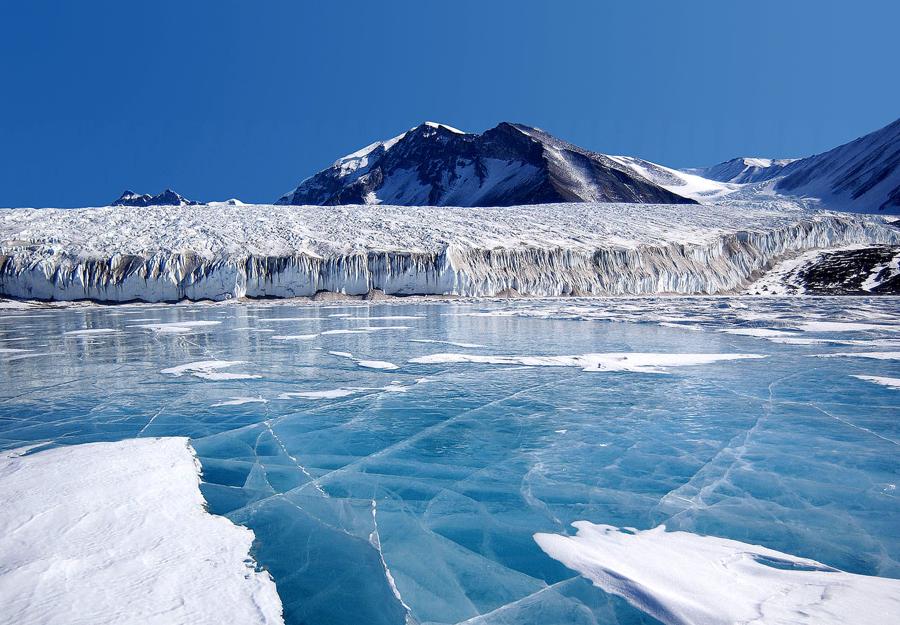
Antarctica is Earth's coldest and driest continent and is 98% covered by sheets of ice, containing 70% of the planet’s fresh water. Although it holds most of the fresh water on Earth, there are giant hidden basins beneath East Antarctica which have not been investigated.
This discovery highlights Antarctica’s tectonic history and helps scientists gain a better understanding of the continent. The East Antarctic ice sheet reveals unrecognized buried landscapes that are similar to each other. The structure of the ice sheet has numerous basins buried underneath, which together form a fan-shaped pattern that forms a larger basin. Researchers named this basin “Province”, and it contains several types of subglacials, including the Aurora and Wilkes basins. The Province basin also contains Lake Vostok, which is known as the largest subglacial lake on Earth. These basins have been around for tens of millions of years and are being recognized for their geological structures.
According to NASA's research team, the East Antarctic structure was formed through distributed rotational extension. This happens when continental crust expands outward at a central point. The pattern is often compared to a hand because the base of the thumb remains in place while the fingers extend. The fingers resemble the triangular basins that formed in the crust.
Scientists believe that numerous tectonic episodes were the reason the structure formed in the ancient supercontinent Gondwana. They also think the formation of the East Antarctic fan-shaped basin Province helped cause the continental breakup of Australia and Antarctica. These findings and discoveries lead to new implications for Antarctica’s ice sheet, such as the bedrock beneath the ice continuing to dictate how it shifts across Antarctica.
Humans do not inhabit underground Antarctica, but it hosts hidden ecosystems and massive, unexplored geological structures.
[Source: ScienceDaily; NASA Science]











Loading Comments...