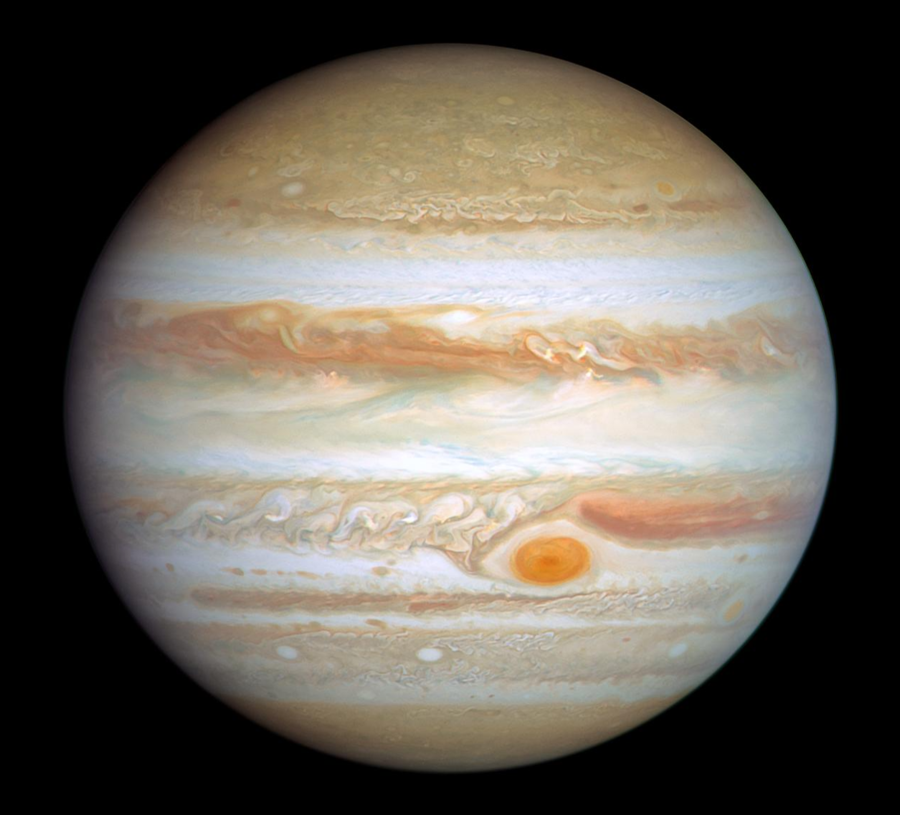
Fifteen Years After Launch, the Juno Space Probe Discovers Jupiter Is Smaller than We Thought
by Oliver Zink, age 15
In 2011, NASA launched the Juno spacecraft to expand our knowledge of Jupiter. The information gathered has helped scientists develop new theories about the gas giant's atmospheric patterns.
The observations of the planet show that it is smaller and flatter than previously thought. Radio data from the spacecraft was used to refine measurements of the planet. The original measurement is from flybys that could not provide as much information. The difference between the old and new measurements is minuscule, but because Jupiter is so large, these measurements have a significant impact on theories. The updated size of Jupiter helps scientists understand the planet's interior and the events happening on and in Jupiter. The more knowledge we have of one gas giant, the more scientists can have a better understanding of other gas giants, even ones located outside of our solar system.
According to NASA, the planet's equator is around five miles narrower, and the poles are 15 miles flatter than initially theorized. The Juno mission is also investigating Jupiter to understand its origins and development by examining the planet's gravity and magnetic fields. The mission will also help explain Jupiter's auroras and the vivid swirling clouds that shape its atmosphere and patterns.
Over 15 years after its launch, Juno has provided the information that NASA was seeking. The Juno will continue gathering additional information until it is no longer usable.
[Sources: Live Science; Nature Astronomy; NASA]











Loading Comments...