OSIRIS-REx Delivers Asteroid Samples That Could Help Understand Our Solar System’s Origins
by Iliyan Hoskins, age 11
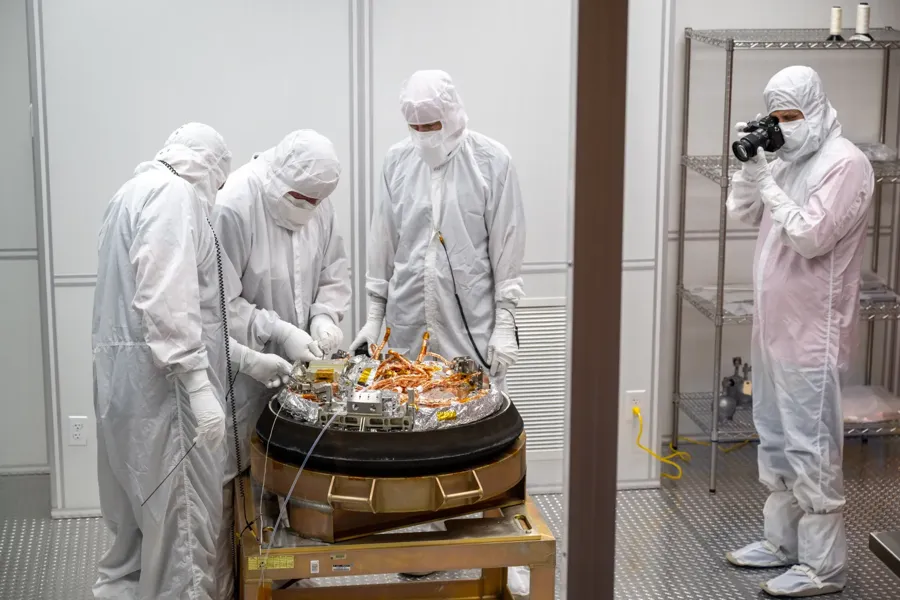
On Sept. 24, 2023, the OSIRIS-REx spacecraft delivered an important package that NASA had been anticipating for seven years.
“This is the rarest stuff we’ve ever had on Earth,” said James Garvin, chief scientist at NASA’s Goddard Space Flight Center in Greenbelt, Maryland. The package contained rocks and dust from the asteroid Bennu. While it may not seem like much, these components can help scientists understand what materials came together to build our solar system and potentially how life began. The samples also provide valuable insight into the dangers posed by asteroids that could collide with Earth.
Donte Lauretta, a planetary scientist at the University of Arizona in Tucson, leads the OSIRIS-REx mission. Despite waiting seven years for these samples, Lauretta and his team only kept a small portion for their own research, with the rest shared among scientists worldwide and saved for future studies.
Lauretta’s team is searching for nucleic acids—the building blocks of DNA—in the samples. “I'm really focused on trying to understand if these kinds of carbon-rich asteroids may have delivered the seeds of life,” Lauretta said.
Asteroids may one day be mined for water and raw materials to support space missions. They could even be used to construct space stations, eliminating the need to send up parts from Earth, according to Mikael Granvik, a physicist at the University of Helsinki and Luleå University of Technology in Sweden. Researchers are fascinated by the stories asteroids can tell. While often seen as floating space debris, asteroids are actually space artifacts that have undergone significant physical and chemical changes over billions of years. The samples from Bennu offer a unique opportunity to better understand the origins of our solar system and life itself.
One concern for scientists is the possibility of an asteroid hitting Earth. By studying Bennu’s composition, scientists can better understand the structure and behavior of asteroids. As Jessica Sunshine, a planetary scientist at the University of Maryland, put it: "Depending on what they're made of and how they’re structured, it’s going to change their effect when they hit us—or if they ever hit us."
This mission marks a first for NASA, and the knowledge gained from it will deepen our understanding of life, our galaxy, and may even lead to technological breakthroughs.
[Sources: Science News Explore; NASA]











Loading Comments...