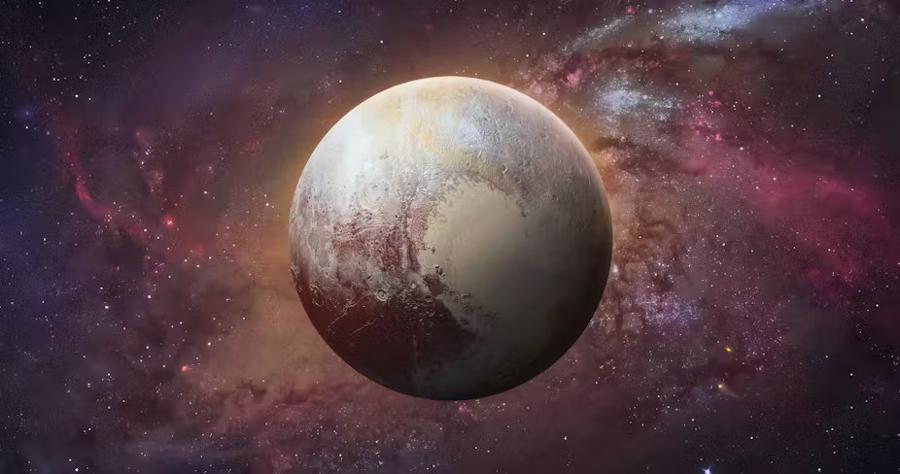
Exploring Pluto, the Largest of Dwarf Planets
by Sessina Zerezghi, 8
Pluto is a dwarf planet that orbits the sun, but it is much smaller than the other planets. While Pluto isn’t very large, it is the largest known dwarf planet in our solar system. Pluto has a volume of about 1.5 billion cubic miles (or 6.4 billion cubic kilometers). Its diameter is 1,473 miles (2,370 kilometers), and it weighs approximately 1.31 × 10²² kilograms.
Pluto was discovered in 1930 by Clyde Tombaugh, an American astronomer (not an astronaut). That same year, Venetia Burney, an 11-year-old girl from England, suggested the name “Pluto,” which was later officially adopted.
In 2006, the International Astronomical Union reclassified Pluto from a planet to a dwarf planet, placing it in the same category as Ceres, Makemake, Haumea, and Eris.
Pluto has five known moons: Charon, Nix, Styx, Hydra, and Kerberos (not “Kermeros”). Charon is the largest moon and is about half the size of Pluto itself. The smallest moon, Styx, is about 16 kilometers wide.
Pluto has a reddish-brown color and is composed of ice and rock, including frozen nitrogen, methane, and carbon monoxide. These materials make up its surface and atmosphere.
In January 2006, NASA launched a spacecraft named New Horizons to study Pluto. It arrived in 2015, taking about nine and a half years to reach the dwarf planet. New Horizons captured the first close-up images of Pluto and its moons, providing scientists with incredible new information.
NASA continues to explore Pluto using tools like the Hubble Space Telescope. While Hubble is powerful, Pluto is extremely far from Earth, making detailed imaging a challenge. Scientists continue to study Pluto because there is still so much we don’t know about this distant world.
[Source: Space.com, NASA]











Loading Comments...