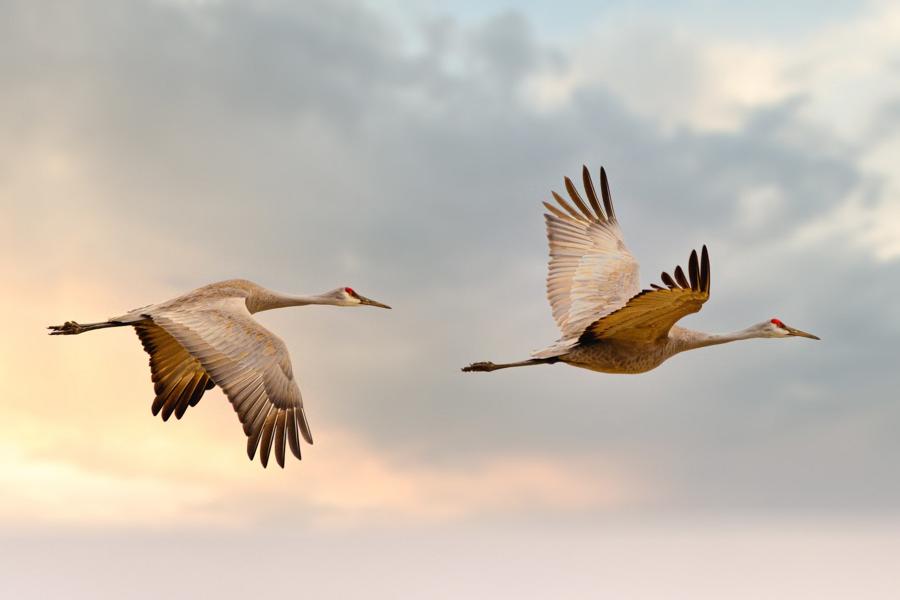
Sandhill Cranes Have Flocked the Sky for Millions of Years
by Arsema Biruk, age 8
Sandhill Cranes draw attention as they fly through the sky in large flocks, called sedges. These large birds have been around for 2.5 million years and can be found in open areas around Canada, as well as northern and southeastern states in the U.S. During the summer, they are seen in bogs, marshes and prairies. During the winter, the cranes migrate in towards the south of the United States.
Sandhill Cranes can stand up to four feet tall, with a wingspan of six to seven feet. They have gray feathers covering their bodies and are known for their distinctive red heads. Many people think these birds are very elegant, especially when they dance. They can also be heard from a long distance. Many describe their calls as bugling and rattling.
These cranes mate for life. They have courting rituals, which include energetic dances. Adult cranes start breeding between the ages of two and seven, and their young stay with their parents for about nine months. Sandhill Cranes usually live for around 20 years. The oldest Sandhill Crane was found in Wisconsin and was 37 years old.
Sandhill Cranes are known to cause some damage to crops by using their long beaks to dig up different seeds and seedlings from the ground. In Wisconsin, the crop most commonly eaten by cranes is corn. There are efforts to resolve the agricultural damage caused by their feeding habits.
Sandhill Cranes are one of the two crane species found in North America. The other species of crane in the U.S. is the whooping crane, an endangered species, which has been recently reintroduced to Wisconsin. Even though Sandhill Cranes are not endangered in most places, some of their populations are endangered in Mississippi and Cuba.
Late last year, the International Crane Foundation released their “Cranes of Wisconsin” license plate, designed by Jay Jocham, a Wisconsin-based artist. Funds raised from these license plates will go toward raising awareness about the Sandhill and Whooping Cranes, as well as keeping both of these birds and their habitats thriving. For those interested, you can buy a license plate on the Wisconsin Department of Transportation website.
[Sources: Daily Cardinal; All About Birds]











Loading Comments...