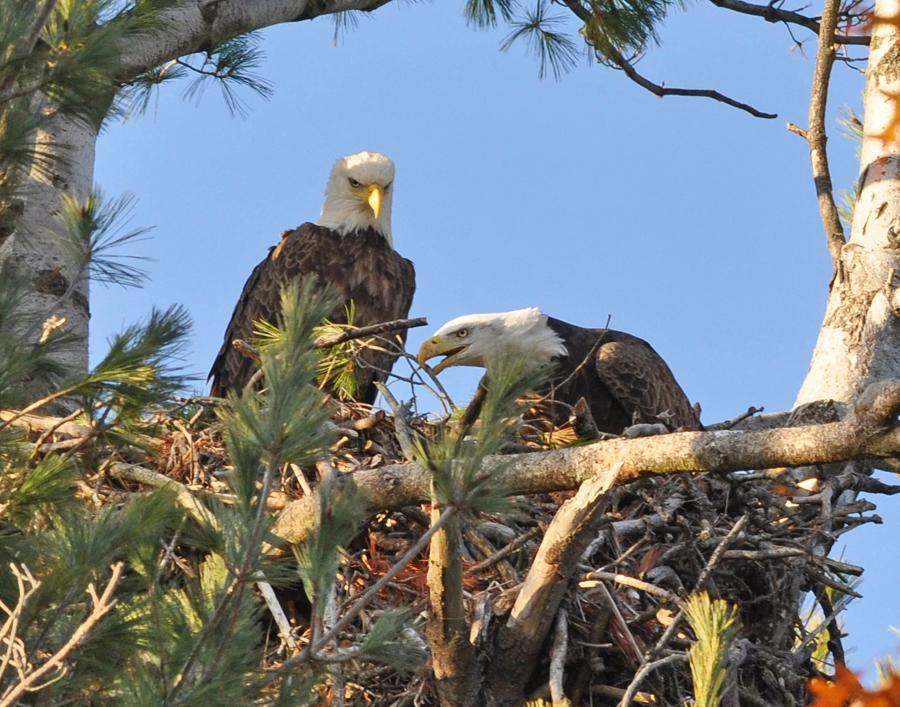
The Bald Eagle Population Is Recovering in Wisconsin
by Theodore Morrison, age 18
Bald eagles, perhaps the most significant symbol of the United States, have had a resurgence in Wisconsin, with numbers reaching a modern state record.
Within the 20th century, the population of bald eagles dropped to less than 1,000 in the whole U.S., devastated by hunting, use of chemicals, and poisoning, reaching record lows in Wisconsin within the 1970s. For purposes of preservation, the Endangered Species Act was passed in the 1970s as federal law, and the ban of a particularly harmful chemical, DDT, was enacted in the state of Wisconsin, leading to a 1978 comeback for the eagle population. These progressions have had a notable impact: the Department of Natural Resources tracked 108 bald eagle nests in Wisconsin during the 1970s, and in 2019, they tracked 1,684.
The Southern Wisconsin Bird Alliance has been monitoring bald eagles in Wisconsin and tracks important observations regarding the birds and their health. These observations are extensive, totalling 5,997 hours over 585 volunteers and include “egg laying, hatching, chick rearing and fledging” over 267 nests between 46 Wisconsin counties.
The observations made by volunteers at the behest of the Southern Wisconsin Bird Alliance come as part of the organization’s Bald Eagle Nest Watch project. Part of participating as a volunteer includes training on how to properly observe the nests, including instruction on “[observing] eagle nests from a distance, documenting nesting success” and timing observation periods. This training served volunteers well: some were able to take pictures or simply observe moments of tremendous natural beauty such as the hatching of the eagles’ young.
Prior to the 2025 report, there was an alarm that the bird flu would continue the devastating trend on the population, persisting since 2021. In 2022, 63% of nesting pairs failed to raise a fledgling from their egg, significantly higher than the long-term average of 19%. However, these fears were fortunately proved wrong when the main cause of nest failure was turbulent weather events, and a number of statistics came back positive: 80% success rate to produce a fledgling, 44% of successful nests producing one, 48% of successful nests producing two, and 8% of successful nests producing three.
The national bird of the United States has had a turbulent history within Wisconsin and the nation at large; however, the recent data has given hope to a healthy population of this iconic bird. The mission of the Southern Wisconsin Bird Alliance’s Bald Eagle Nest Watch program provided a new and enlightening look into the health of the species and provides hope for further growth and health among bald eagles. Almost nowhere in the state is immune to a sighting. Comprehensively, the data collected serves as a bright reminder of the progress the nation at large and the state of Wisconsin have made to preserve the bald eagle species.
[Sources: Milwaukee Journal Sentinel; WI DNR]











Loading Comments...