126 Years Ago, George Edwin Taylor Was America's First Black Presidential Candidate
by Niko Sayu, age 11
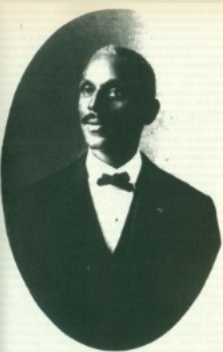
La Crosse author Darell Ferguson asked his city's K-12 students to name the first black presidential candidate. Most guessed Barack Obama, Jesse Jackson, or even Shirley Chisholm, but they were all wrong. George Edwin Taylor was born in Little Rock, Arkansas, and grew up in La Crosse, Wisconsin. He was the first African-American to run for president 126 years ago.
Ferguson recently released a children's book titled “A Long Way to Find Home: George Edwin Taylor as a Child.” It details Taylor’s childhood, his political life, and his teenage years. Taylor was born on Aug 4, 1857. His mother was a free woman named Amanda Hines. His father was an enslaved man named Bryant Nathan Taylor. George was born two years before the passing of a law by Arkansas lawmakers forcing all free Black people out of the state. He and his mother moved to the town of Alton, Illinois, where they would live for three years until the tuberculosis-related death of his mother when he was five years old. Taylor spent the next several years of his life alone.
At the age of eight, he stowed away on a steamboat known as the Hawkeye State Express, spending several years in La Crosse with multiple foster families. At the age of 12, he was arrested and sent to live with Nathan Smith, a farmer and a former enslaved man. Ferguson describes Taylor’s life with Smith in his book. In an interview, he said, “Nathan was the one that George got to see had that involvement in the labor movement, in making sure farmers got equal rights”.
Ferguson's book is told through the eyes of three children as they dig through books and historical records to learn why Taylor ran for president. There were many blank spots in Taylor's childhood that Ferguson had to fill with fiction. For example, when Taylor first met Smith. Ferguson imagines what Smith may have told Taylor. Ferguson writes, “You need to decide, are you going to keep scratching and scrounging, or are you going to make a difference in this world?”
“George rolled his eyes and looked away. ‘Sure, whatever you say, can't do much on a farm. A farmer can’t do nothing but work in the dirt.’”
“Nathan smiled. ‘Wouldn’t be so sure. A lot to learn from nature and the land. Nature ain’t gonna knock you to the ground for being who you are. She treats everyone equally and doesn’t care about the color of your skin.’”
Ferguson even made a fictional dog for Taylor while he was in Alton. “Ok, we’ll give him a dog, and we’ll name the dog Pork Chop because he was always hungry and he loved pork chops,” said Ferguson.
After living with Smith for many years, Taylor decided to move to Beaver Dam, Wisconsin, to attend college at Wayland University for two years. After finishing school, he returned to La Crosse, where he worked for the La Crosse Free Press and La Crosse Evening Star newspapers. For many years, he produced newspaper columns for local papers, as well as working for the Chicago Inter Ocean. At one point, he produced his own newspaper known as the “Wisconsin Labor Advocate.” His newspaper work was what brought him into both local and national politics.
Taylor’s work in LaCrosse greatly impacted his life and led him to move to Iowa many years later, in his mid-30s, to join a rapidly growing black political movement. He advocated for both the Democratic and Republican parties at different times, after which he would go on to help form the Negro Liberty Party and run against Alton B. Parker and Teddy Roosevelt in 1904.
Darell Ferguson's book sheds a much-needed light on the life of a historically underrepresented figure. It shows just how hard George Edwin Taylor worked to become America's very first black presidential candidate.
[Sources: Jim Crow Museum; Wisconsin Life; Wisconsin Historical Society]











Loading Comments...