The Cool History of Ice Harvesting in Wisconsin
by Malak Al-Quaraishi, age 14
Many years ago, people depended on ice to keep their produce and other items cold. They used what was essentially a modern-day refrigerator, but it was called an ice box. An ice box was a wooden or metal cabinet that held large blocks of ice to keep food cool before electric refrigerators became common.
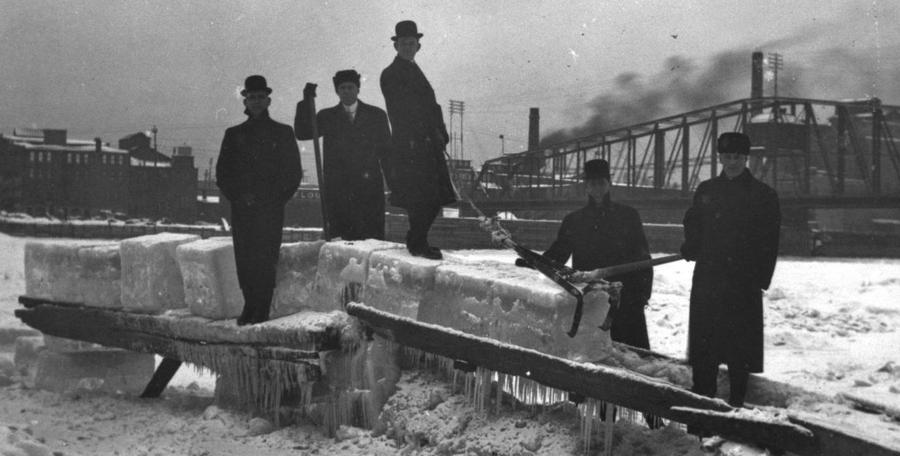
Harvesting ice blocks was a dangerous and physically demanding process. Workers would travel to lakes across Wisconsin during the winter to cut large blocks of ice, sometimes weighing up to 300–500 pounds, and haul them away for storage in ice houses insulated with sawdust. This allowed the ice to stay frozen well into the summer. Although the job was risky, it paid well and helped many workers support their families.
Thanks to its many lakes and long, cold winters, Wisconsin became a key state for ice harvesting. The thick, clean ice from northern Wisconsin was especially valued. Ice was essential for transporting perishable goods like cheese, meat, milk, and beer, all important to Wisconsin’s economy. Breweries, especially in Milwaukee, were major consumers of ice. Companies like Pabst, Schlitz, and Miller relied heavily on ice to store and ship beer.
However, during Prohibition in the 1920s, the production and sale of alcohol were banned, leading to a sharp drop in demand for brewing and ice. This caused the ice harvesting industry to decline. Eventually, with the invention and spread of electric refrigerators, ice harvesting became a thing of the past.
Still, some people today continue to call their refrigerators “ice boxes”, a small reminder of Wisconsin’s cool history.
[Source: Wisconsin History Highlights]











Loading Comments...