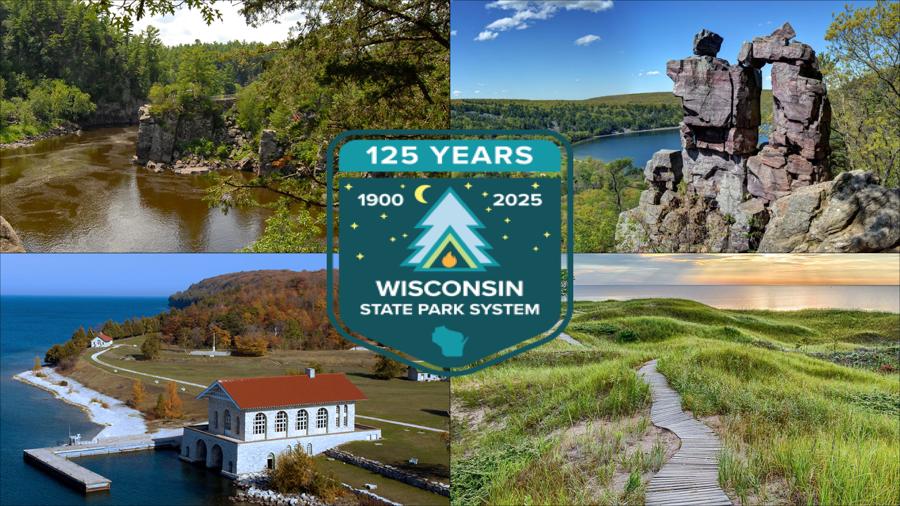
Wisconsin State Parks Celebrate 125 Years of Natural Beauty
by Moore Vang, age 16
From vibrant forests and towering rock formations, to picturesque lakes and flourishing wildlife, Wisconsin has preserved some of its natural areas for 125 years. To celebrate this milestone, staff of the parks system are hosting a year-long event to encourage people to enjoy the land and learn about the parks’ history. There are 50 state parks, 44 state trails, 15 state forests, nine state recreation areas, and eight rivers and resource areas. In total, the state park system covers around 307,000 acres.
The first iteration of a state park in Wisconsin came in 1870 when the Legislature set aside 50,000 acres of land in Vilas and Oneida counties known as The State Park. However, the land was sold and did not become official as it was only meant to preserve a piece of land for a limited amount of time.
Following this, citizens of Minnesota and Wisconsin pursued an idea from Harry Baker and George Hazard, residents of St. Croix Falls, were dedicated to preserving the St. Croix River on the border of Wisconsin and Minnesota. The park was approved by Minnesota in 1895, followed by Wisconsin in 1900. This state park would be officially named Interstate State Park. Today, it remains the oldest state park in Wisconsin, containing various attractions such as distinct geology, hiking trails, cliff-top views, canoeing, and kayaking.
The grand views and attractions of Interstate State Park come from its geology. More than 1.1 billion years ago, basalt rock hardened from lava flow, caused by earthquakes ranging from Taylor Falls near Minneapolis to Lake Superior. Along with this, a range of earthquakes formed valleys that shifted in shape throughout history starting 70 million years ago to 10,000 years ago. Glacial meltwaters formed these valleys as they carved into the earth and created its current dalles, potholes, and cliffs.
During the beginning processes of expanding the state parks, an architect named John Nolan helped the Legislature organize the system's arrangement. In 1909, he wrote a report supporting economic gain, recreational opportunities, and the protection of wildlife and natural resources. This led to the creation of four state parks, including the notable Devil’s Lake State Park in Baraboo with its impressive mountains and rocky lakeshore. The most recent addition to the state parks is Lizard Mound State Park, which preserves mounds and is located in the Driftless Area of Wisconsin.
The Wisconsin State Park System provides a judicious selection of outdoor opportunities for Wisconsinites and tourists. These experiences range from trails and scenery to equipment rentals like kayaks, canoes, and bicycles. Employees of the state parks system plan to make multiple improvements in the future, including using web-based technology, providing more public access, and expanding land for more recreational opportunities. With these additions, the Wisconsin State Park System ensures that Wisconsin’s natural beauty will be preserved for the next 125 years.
[Sources: Wisconsin History; Geography; Science & Tech; Milwaukee Journal Sentinel]











Loading Comments...